Introduction: Why Choose a Planted Fish Tank?
Imagine this: your aquarium isn’t just a glass box filled with water and fish—it’s a living ecosystem, a green aquatic paradise that’s self-sustaining, beautiful, and full of life. That’s the magic of a planted fish tank.
Unlike bare tanks or those filled with artificial plants, a planted tank provides a balanced, natural environment for both your plants and your fish. It’s not just visually stunning; it also offers cleaner water, healthier fish, and a more peaceful experience for you.
But where do you start? With so many plants, lights, substrates, and fish to choose from, it can feel overwhelming. This in-depth guide breaks down everything you need to know—whether you’re a first-timer or looking to refine your setup.
Table of Contents
Why Go for a Planted Fish Tank?
Before jumping into the how-to, let’s explore what makes a planted fish tank so appealing.
1. Natural Filtration
Live plants absorb ammonia, nitrates, and CO₂—helping maintain cleaner water and reducing algae outbreaks.
2. Enhanced Fish Health
Plants mimic a fish’s natural habitat, lowering stress and providing hiding spots. Many species thrive in planted tanks compared to bare ones.
3. Aesthetics
From lush green carpets to towering background plants, planted tanks offer a serene, landscape-like beauty that plastic decorations can’t match.
4. Low Maintenance (Long-Term)
Once balanced, planted tanks require fewer water changes and less algae cleaning than traditional setups.
Types of Planted Fish Tanks
Planted tanks aren’t one-size-fits-all. Choosing the right style helps guide your plant and fish choices.
H2: 1. Low-Tech Planted Tank
- No CO₂ injection
- Basic lighting
- Hardy plants
- Ideal for beginners
H2: 2. High-Tech Planted Tank
- CO₂ injection system
- Strong lighting
- Regular fertilization
- Allows for dense plant growth and vibrant aquascaping
H2: 3. Walstad Method
- Soil-based substrate
- No filtration or CO₂
- Relies on natural balance
- Great for eco-conscious aquarists
What You Need to Set Up a Planted Fish Tank
H2: 1. Aquarium
A standard 20-gallon tank is a perfect start. It offers enough space for plants and fish while being manageable for maintenance.
H2: 2. Substrate
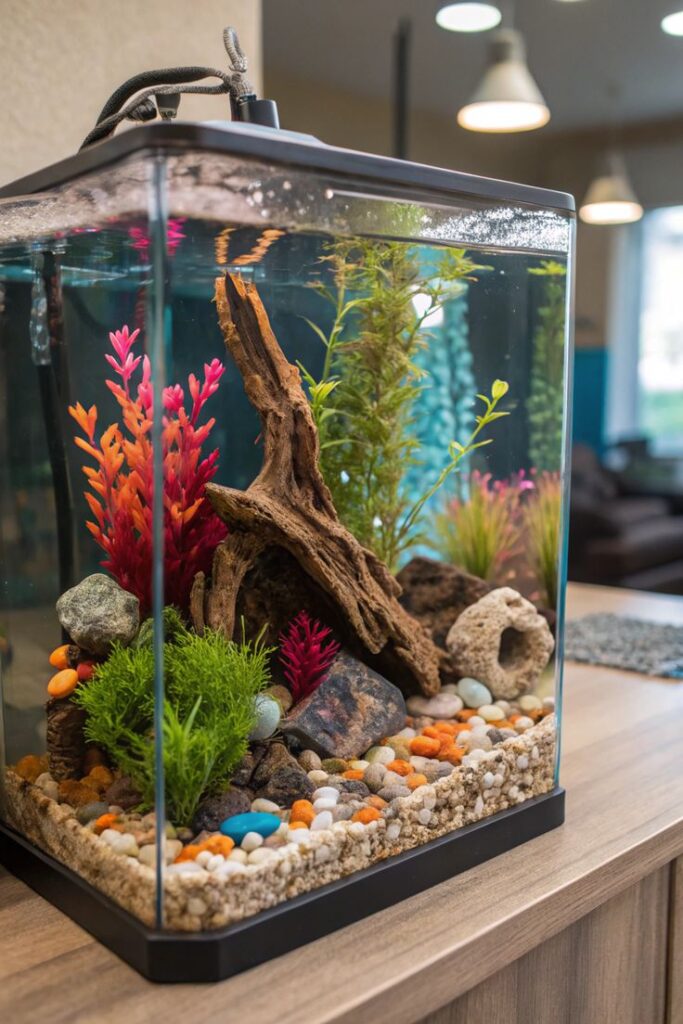
Substrate is the foundation of your planted tank. It nourishes the plants and anchors their roots.
Recommended Options:
- Fluval Stratum – Great for shrimp tanks
- Eco-Complete – Rich in nutrients
- ADA Aqua Soil – Premium but requires cycling due to ammonia spike
- Inert Gravel/Sand – Use only with root tabs or floating plants
H2: 3. Lighting
Plants need light to photosynthesize. The stronger your light, the more plant options you’ll have.
| Light Intensity | Plant Types Supported |
|---|---|
| Low | Anubias, Java Fern, Crypts |
| Medium | Amazon Sword, Dwarf Sagittaria |
| High | Monte Carlo, HC Cuba, Red plants |
Go for full-spectrum LED lights (6,500K–7,000K) and aim for 8–10 hours of light per day using a timer.
H2: 4. CO₂ System (Optional)
CO₂ boosts plant growth and color but isn’t necessary in low-tech setups. DIY yeast-based kits or pressurized systems are available depending on budget.
H2: 5. Fertilizers
Plants need macro and micronutrients:
- Macros: Nitrate (N), Phosphate (P), Potassium (K)
- Micros: Iron (Fe), Magnesium (Mg), Zinc (Zn)
Use liquid fertilizers like Seachem Flourish or dry dosing methods like EI (Estimative Index).
Best Plants for a Planted Fish Tank
Start with beginner-friendly species. Here are some safe bets:
H3: Low-Light Plants
- Java Fern (Microsorum pteropus) – Hardy, attaches to rocks
- Anubias – Slow-growing, shade tolerant
- Cryptocoryne – Low maintenance, comes in various leaf shapes
- Hornwort – Fast-growing floating plant
H3: Medium-Light Plants
- Amazon Sword – Great background plant
- Water Wisteria – Adds texture, fast grower
- Dwarf Sagittaria – Carpet-like effect
H3: High-Light Plants (CO₂ Recommended)
- Monte Carlo – Vibrant green carpet
- Rotala Rotundifolia – Adds red tones
- HC Cuba – For nano tanks and intricate layouts
Fish That Thrive in a Planted Fish Tank
Not all fish are plant-friendly. Avoid large herbivores like goldfish and certain cichlids. Instead, opt for smaller community fish that benefit from the cover and clean environment.
Ideal Choices:
- Neon Tetras
- Harlequin Rasboras
- Corydoras Catfish
- Cherry Shrimp
- Otocinclus Catfish
- Betta Fish (solo tank or peaceful setup)
Pro Tip: Shrimp and snails help clean algae and leftover food, acting as a clean-up crew.
Aquascaping Styles for Planted Tanks
How you arrange your plants and hardscape (rocks, driftwood) shapes your tank’s personality.
H2: 1. Nature Aquarium
Inspired by natural landscapes. Uses plants, rocks, and wood to mimic forests or rivers.
H2: 2. Iwagumi Style
Minimalist layout with stones as the main feature. Often uses only one type of plant like carpeting species.
H2: 3. Dutch Style
Focuses on dense plant growth, vivid colors, and layered planting. No hardscape used.
Daily and Weekly Maintenance for Planted Tanks
A well-maintained planted fish tank rewards you with beauty and stability. Here’s what to keep in mind:
Daily
- Monitor fish behavior and plant health
- Check temperature and CO₂ levels (if used)
Weekly
- Test water parameters: pH, KH, GH, ammonia, nitrite, nitrate
- Perform 20–30% water change
- Trim overgrown plants
- Clean glass (avoid harsh scrubbers)
- Dose fertilizers
Monthly
- Clean filter (rinse media in tank water)
- Rearrange or prune heavily if needed
- Inspect substrate and vacuum lightly
Troubleshooting Common Issues in Planted Tanks
Even well-designed tanks run into issues. Knowing the cause helps fix it fast.
Problem: Algae Overgrowth
Cause: Too much light, excess nutrients
Fix: Reduce lighting hours, increase water changes, add algae-eaters
Problem: Yellowing Leaves
Cause: Nutrient deficiency (often iron)
Fix: Add a comprehensive liquid fertilizer
Problem: Melting Plants
Cause: Crypt melt, transplant shock
Fix: Be patient—new growth will appear
Problem: Cloudy Water
Cause: Uncycled tank or bacterial bloom
Fix: Ensure proper cycling, avoid overfeeding
Personal Experience: My Journey with a Planted Fish Tank
When I set up my first planted fish tank, I went low-tech: 20 gallons, no CO₂, and just a handful of plants. Within weeks, I noticed a shift in how peaceful the room felt. Watching the greenery sway gently in the filter’s flow was hypnotic.
Eventually, I upgraded to a high-tech setup with carpeting plants and CO₂ injection. Yes, the learning curve was steep—but the joy of watching my tank evolve into a lush aquascape made every step worth it.