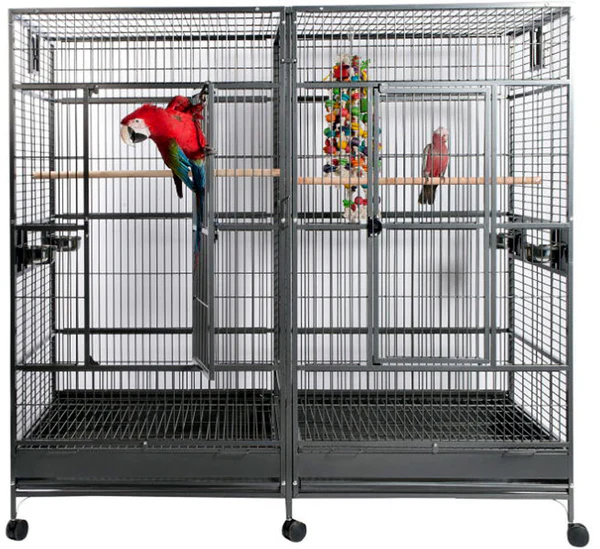
When it comes to caring for your parrot, one of the most important investments you’ll ever make is choosing the right cage. For large and active birds, a huge parrot cage isn’t a luxury—it’s a necessity.
Parrots are intelligent, energetic, and social creatures. Keeping them confined in a cramped space can lead to boredom, stress, and even health issues. That’s why providing a spacious, well-designed cage can dramatically enhance their quality of life.
Let’s explore what makes a huge parrot cage worth it—and how to choose the best one for your bird.
Table of Contents
Why Cage Size Matters for Parrots
Physical Space for Movement
A huge parrot cage gives your bird the freedom to:
- Flap its wings without hitting bars
- Climb and explore naturally
- Exercise, which prevents obesity and muscle atrophy
Birds are built to fly and climb, and a large cage helps mimic that freedom indoors.
Mental Stimulation
Larger cages allow more toys, perches, and enrichment opportunities. A stimulated parrot is less likely to:
- Pluck feathers
- Scream excessively
- Exhibit aggressive behavior
Mental enrichment is just as vital as physical health in birds, especially for intelligent species like macaws, African greys, or cockatoos.
Features to Look for in a Huge Parrot Cage
Not all large cages are created equal. When choosing a huge parrot cage, consider these essential features:
1. Bar Spacing
Larger birds need wider spacing, but it should still be safe.
- For macaws and cockatoos: 1 to 1.5 inches
- For smaller parrots (like African greys or Amazons): 0.75 to 1 inch
Incorrect spacing can lead to injury if your bird tries to squeeze through or gets stuck.
2. Strong Materials
Large parrots have powerful beaks and can chew through flimsy materials. Look for:
- Wrought iron or stainless steel construction
- Non-toxic powder-coated finishes
Avoid cages with paint or soft metal that may chip and become a health hazard.
3. Easy Access and Cleaning
A large cage shouldn’t mean a difficult time for the owner. Choose a design with:
- Removable trays
- Wide doors for easy cleaning and feeding
- Casters for mobility
4. Multiple Doors and Feeding Stations
Big parrots require multiple food and water bowls. Cages with built-in feeding doors save time and reduce stress for both you and your bird.
Top Types of Huge Parrot Cages
Here’s a breakdown of popular cage styles for large parrots:
| Cage Type | Best For | Pros | Cons |
|---|---|---|---|
| Dome-Top Cages | Active birds | Extra climbing space, aesthetic | Slightly harder to clean |
| Play-Top Cages | Social birds | Built-in play area on top | May get messy outside the cage |
| Aviary Cages | Multiple or giant birds | Maximum space, flight capability | Requires room and higher budget |
| Corner Cages | Space-saving needs | Utilizes corner space efficiently | Often smaller than traditional huge cages |
Real-Life Insight: Bigger Cage, Happier Bird
After upgrading to a huge parrot cage for my blue-and-gold macaw, the change in his behavior was instant. He became more vocal (in a good way), started playing with toys he previously ignored, and even resumed some of his natural foraging behaviors. It’s a reminder that space isn’t just physical—it affects mental well-being too.
Cage Setup Tips for Maximum Comfort
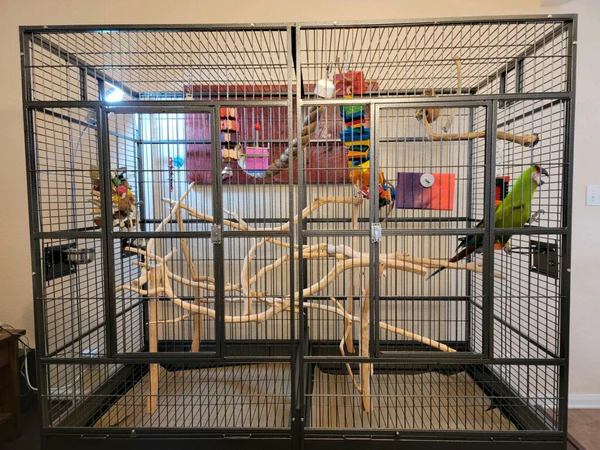
A big cage needs thoughtful organization. Here’s how to set up a huge parrot cage the right way:
🟢 Perches of Different Types
Mix natural wood branches, rope perches, and smooth surfaces to give your parrot variety and foot health.
🟢 Toys and Enrichment
Rotate toys weekly to maintain interest. Include:
- Foraging toys
- Shreddable items
- Bells or mirrors (used cautiously)
🟢 Feeding Stations
Place food and water away from perches to reduce contamination. Use stainless steel bowls for hygiene and durability.
🟢 Sleeping Area
Designate a quieter, darker section of the cage for sleep, ideally with a sleep perch or cover.
Common Mistakes to Avoid
Even with a huge parrot cage, owners can fall into certain traps:
- Overcrowding: Too many toys or accessories can reduce usable space.
- Neglecting Cleaning: Larger cages mean more surface area. Schedule regular clean-ups to prevent bacteria buildup.
- Wrong Placement: Keep the cage away from direct sunlight, drafts, or the kitchen (fumes are toxic to birds).
Where to Place a Huge Parrot Cage
Location matters. Ideal placements include:
- A bright, active area (living room, bird-safe sunroom)
- Somewhere your parrot can engage with the family without being overwhelmed
- Avoid isolation; parrots thrive on interaction
When a Huge Cage Becomes a Mini-Aviary
Some bird lovers take it a step further by creating entire bird rooms or walk-in aviaries. These setups offer:
- Maximum freedom and flight area
- Opportunity for natural behaviors
- Daily out-of-cage time without risks
If space and budget allow, a mini-aviary is a wonderful alternative for very large parrots or multiple birds.
FAQs About Huge Parrot Cages
Q: Can a small parrot use a huge cage?
Yes—but make sure the bar spacing is appropriate. A small bird in a large cage with wide bars can get injured.
Q: How often should I clean a huge parrot cage?
Spot-clean daily. Do a full clean weekly and deep disinfect monthly.
Q: Is stainless steel worth the price?
Absolutely. It’s more expensive initially but lasts longer and is safer than coated metals.
Final Thoughts
A huge parrot cage isn’t just a home—it’s a habitat. It’s where your parrot will eat, sleep, play, and live most of its life. Investing in the right size and quality cage can mean the difference between a bored, anxious bird and a healthy, happy companion.
Parrots aren’t just pets—they’re companions for decades. They deserve space to thrive, not just survive.
So when in doubt, always go bigger. Your bird will thank you—with songs, tricks, and that unmistakable look of joy. Want to learn more about the pet products.