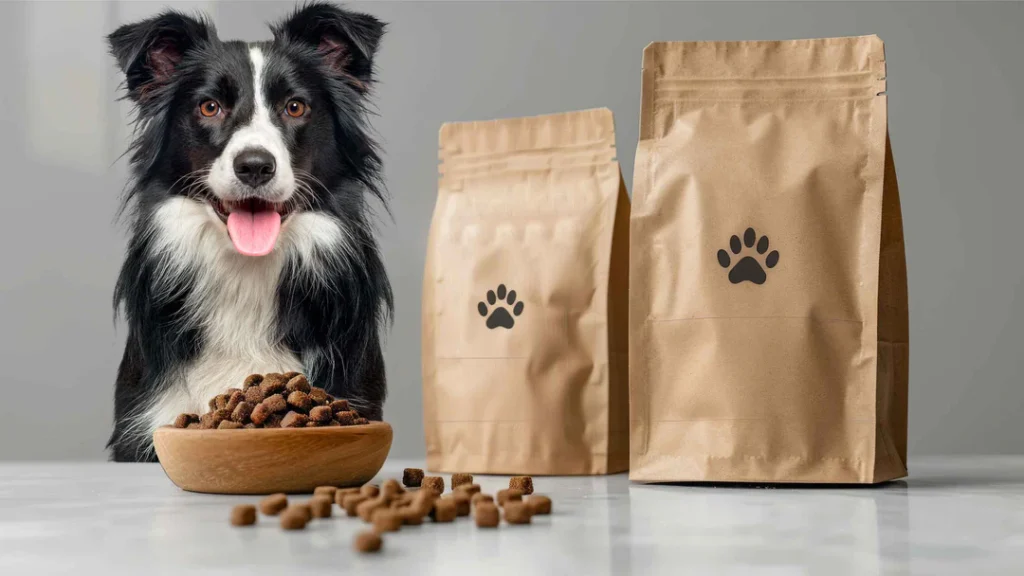
When it comes to feeding our furry friends, most of us focus on the type of food—grain-free, organic, raw, or kibble. But what about the dog food bag that stores it all? While it may seem like a minor detail, the right dog food bag can have a big impact on freshness, storage convenience, and even your pet’s health.
In this guide, we dive deep into why your choice of dog food bag matters, how to pick the right one, and what options are best for every kind of dog owner.
Table of Contents
Why the Dog Food Bag Matters
The packaging that holds your pet’s food plays a bigger role than most realize. It’s not just a vessel; it’s a storage environment. Choosing the wrong dog food bag can lead to:
- Spoiled or stale food
- Pest infestations
- Loss of essential nutrients
- Wasted money
Understanding the role of the bag helps us make smarter choices.
Types of Dog Food Bags
Let’s break down the common types of dog food bag materials and their pros and cons.
1. Plastic Bags
Common in commercial packaging, plastic is lightweight and cost-effective.
Pros:
- Lightweight
- Cheap to produce
- Moisture-resistant
Cons:
- Prone to punctures
- Doesn’t always reseal well
- Can absorb smells
2. Mylar or Foil-Lined Bags
Used by premium brands to keep food fresher for longer.
Pros:
- Excellent at preserving freshness
- Provides an airtight seal
- Durable and pest-resistant
Cons:
- Not always recyclable
- Slightly more expensive
3. Paper Bags
Used by natural or eco-friendly dog food companies.
Pros:
- Biodegradable
- Environmentally friendly
Cons:
- Poor moisture protection
- Tears easily
- Often lacks reseal features
4. Resealable Storage Bags
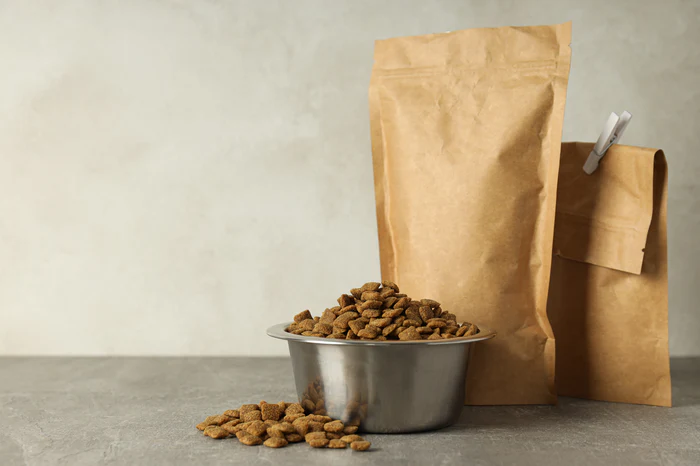
Often purchased separately to replace the manufacturer’s packaging.
Pros:
- Airtight and reusable
- Better for long-term storage
- Reduces exposure to air, moisture, and pests
Cons:
- Extra cost
- Need to transfer food
Key Features to Look For
Here are some key features you should consider when choosing a dog food bag:
✔️ Airtight Seal
Keeps the food fresh and free of moisture and bugs.
✔️ Resealable Zip or Velcro
Makes it easy to open and close without tools, reducing spills and contamination.
✔️ Durable Material
Strong enough to resist punctures, tears, and leaks.
✔️ Easy to Store
Some bags come with handles or flat bases to make storage neater.
✔️ BPA-Free Material
Important if you’re going to transfer the food into another container.
Size and Storage Tips
When choosing the right dog food bag, size matters too. Here’s a basic guide:
| Dog Size | Daily Intake Estimate | Recommended Bag Size |
|---|---|---|
| Small (under 20 lbs) | 1 – 1.5 cups | 5 – 10 lb bags |
| Medium (20–50 lbs) | 2 – 3 cups | 15 – 25 lb bags |
| Large (50–100 lbs) | 3 – 5 cups | 30 – 50 lb bags |
Make sure the bag you choose fits your storage space and matches your dog’s food consumption rate. Overbuying can lead to stale food by the time you get to the bottom of the bag.
Should You Reseal or Transfer?
There are two main ways to manage your dog food after opening it:
🐾 Keep It in the Original Bag
If it’s resealable and designed for freshness, you can keep the food inside.
Tip:
Use a bag clip if there’s no seal.
🐾 Transfer to Airtight Containers
Many pet parents prefer to pour kibble into BPA-free containers for added protection.
Tip:
Place the original dog food bag inside the container without dumping the food. This way, you keep product information like expiration dates.
Storage Mistakes to Avoid
Even the best dog food bag can’t protect your pet’s food if you store it improperly. Here are some common mistakes to avoid:
- Leaving it in sunlight – Heat causes fats to spoil.
- Storing in damp areas – Encourages mold.
- Keeping it on the floor – Attracts pests and contaminants.
- Not sealing it properly – Leads to oxidation and stale food.
Eco-Friendly Options
Sustainability is becoming a priority for many pet owners. Thankfully, the dog food bag industry is catching up.
Look for:
- Recyclable packaging
- Biodegradable bags
- Reusable storage bags
- Brands that offer bulk-buy refill stations
Supporting companies that use earth-friendly materials is a great way to align your pet care choices with your environmental values.
Real-Life Tip from a Dog Parent
“I used to ignore the packaging until my dog started refusing food halfway through a big bag. Once I switched to smaller, resealable bags and stored them in a dry pantry, he finished every meal happily. It wasn’t the food—it was how I stored it.”
—Lara, dog mom of two Labradors
Top Brands with Quality Dog Food Bags
Some pet food companies are setting the standard when it comes to packaging. A few names to consider:
- Royal Canin – Offers Velcro-seal technology on larger bags
- Hill’s Science Diet – Uses foil-lined packaging for freshness
- Orijen & Acana – Eco-conscious bags with airtight zippers
- Blue Buffalo – Durable plastic materials with freshness lock
Final Thoughts: More Than Just a Bag
Choosing the right dog food bag may not seem like a big decision, but it affects your dog’s health, food freshness, and daily routine. By paying attention to materials, sealing features, size, and storage practices, you can make a smarter choice that benefits both you and your dog.
Next time you’re picking up a bag of dog food, don’t just look at the ingredients—look at what’s holding them too. Want to find more about pet products you can visit our website.