Introduction
Brushing your cat’s teeth might sound like a challenge, but it’s one of the most important parts of keeping them healthy. Dental problems are common in cats, and they can lead to pain, infections, and even serious health issues if left untreated. The good news? With the right approach, you can brush cat teeth without stress—for both you and your furry friend.
In this guide, we’ll walk through why brushing cat teeth matters, how to do it correctly, the tools you need, and tips for making it a positive experience.
Table of Contents
Why Brushing Cat Teeth is Important
Just like humans, cats can suffer from:
- Plaque and tartar buildup
- Gum disease (gingivitis)
- Tooth decay
- Bad breath (halitosis)
- Tooth loss
Poor dental health in cats can also contribute to heart, kidney, and liver problems due to bacteria spreading from the mouth into the bloodstream.
Fact: According to veterinary studies, more than 70% of cats over the age of 3 show signs of dental disease.
Brushing your cat’s teeth is the most effective way to prevent these issues and ensure your cat stays healthy and pain-free.
When to Start Brushing Your Cat’s Teeth
The best time to start is when your cat is young, but it’s never too late to begin. Starting early helps your cat get used to the process.
- Kittens: Begin introducing dental care at 6 months old.
- Adult Cats: Start slowly to build trust.
- Senior Cats: Extra care is needed; check for existing dental issues before brushing.
What You Need to Brush Cat Teeth
Before starting, gather the right tools:
| Item | Description |
|---|---|
| Cat Toothbrush | A small, soft-bristled brush or a finger brush designed for cats. |
| Cat Toothpaste | Special enzymatic toothpaste for cats (never use human toothpaste). |
| Dental Wipes (Optional) | Good for cats that resist brushing. |
| Treats | To reward and encourage your cat after brushing. |
How to Brush Your Cat’s Teeth – Step-by-Step
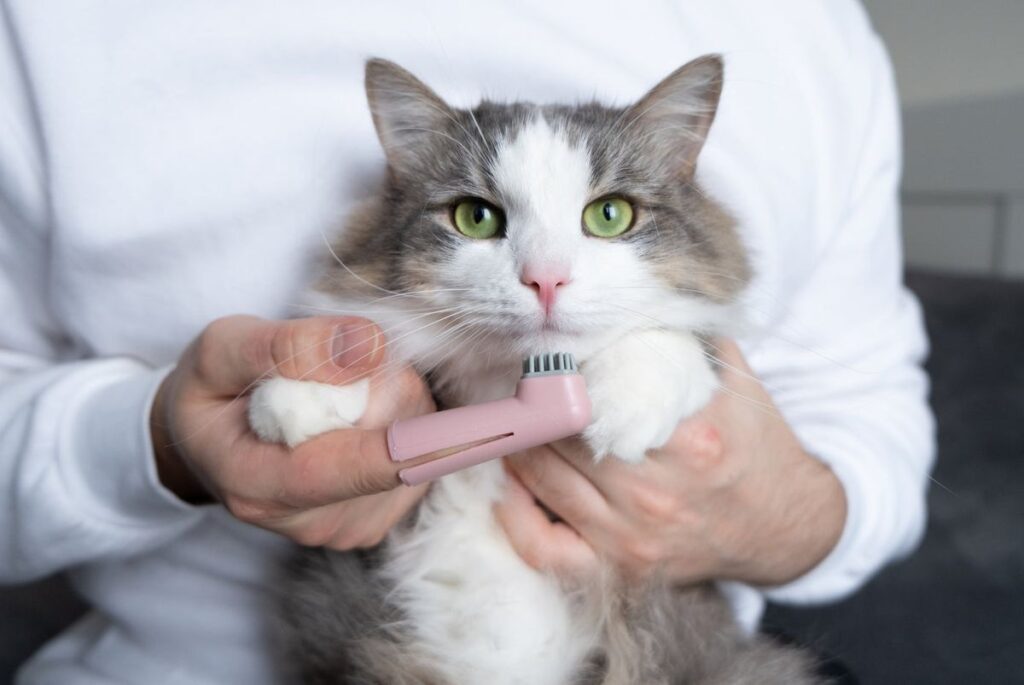
- Choose the Right Time
Pick a calm, quiet time when your cat is relaxed—after a meal or nap works well. - Get Your Cat Comfortable
Let your cat sniff and lick the toothbrush and toothpaste first. - Introduce the Toothpaste
Use a small amount of cat-safe toothpaste and let them taste it. - Start Slowly
Begin by gently lifting their lip and touching the toothbrush to their teeth for a few seconds. - Brush Gently
Use small circular motions, focusing on the outer surfaces of the teeth. - Go Gradually
Increase brushing time each day until you can brush for about 30 seconds per side. - Reward Your Cat
End with a treat or play session so your cat associates brushing with something positive.
Tips for Success
- Be patient – It can take weeks for a cat to get used to brushing.
- Don’t force it – If your cat resists too much, take a break and try again later.
- Start with short sessions – Even a few seconds daily helps.
- Use praise and rewards – Positive reinforcement works wonders.
Alternatives to Brushing
If brushing cat teeth is too difficult, you can try:
- Dental treats (help reduce plaque)
- Water additives (reduce bacteria)
- Dental wipes (quick and easy)
- Professional veterinary cleaning
However, these are not as effective as brushing and should be used as a supplement, not a replacement.
How Often Should You Brush Your Cat’s Teeth?
- Best practice: Daily brushing
- Minimum: 3–4 times a week
Consistency is key for preventing plaque buildup and gum disease.
Signs Your Cat Needs Dental Attention
Call your vet if you notice:
- Bad breath
- Drooling
- Swollen or bleeding gums
- Difficulty eating
- Pawing at the mouth
These symptoms may indicate serious dental problems that require professional care.
Final Thoughts
Learning to brush cat teeth is an investment in your cat’s long-term health and comfort. While it may take patience and practice, the benefits far outweigh the effort. By making it a part of your routine and using the right tools, you’ll help prevent dental disease, save on vet bills, and keep your cat happy and healthy.